We Have to Build More Housing. That Doesn't Mean We Have to Build Ugly.
The housing crisis gives us a mandate to build at a scale we haven't seen in generations. That is genuinely exciting if we use it right.
Here's that one. This topic clearly has some real conviction behind it — I let that come through.
We Have to Build More Housing. That Doesn't Mean We Have to Build Ugly.
The housing crisis is real. Nobody serious is arguing otherwise anymore. Prices are out of reach for an entire generation. Rental supply is critically short. Cities like Burlington are under genuine pressure to add density, approve more projects, move faster. The provincial government has made it clear that municipalities no longer have the luxury of saying no.
Fine. Build more. We need it.
But here's the thing nobody seems willing to say loudly enough: the answer to a housing crisis is not to fill our cities with buildings that make people feel nothing. Density and beauty are not in opposition. We are choosing to treat them that way, and that choice is going to haunt us for fifty years.
Look at what's going up in most Ontario cities right now. Glass and steel towers with the visual warmth of a parking structure. Podium buildings with retail at grade that sits empty because the streetscape was never designed for human beings to actually want to linger there. Subdivisions where every house is a variation of the same four models, arranged on streets with no trees, no variation, no sense that anyone asked what it might feel like to live there in twenty years.
We are building the slums of the future and calling it progress.
This is not inevitable. It is a choice — made by developers optimizing for margin, by planners optimizing for compliance, by approval processes that measure square footage and setbacks and parking ratios but have no metric for whether a building is worth looking at. Beauty has been engineered out of the process entirely, treated as a luxury add-on rather than a baseline requirement.
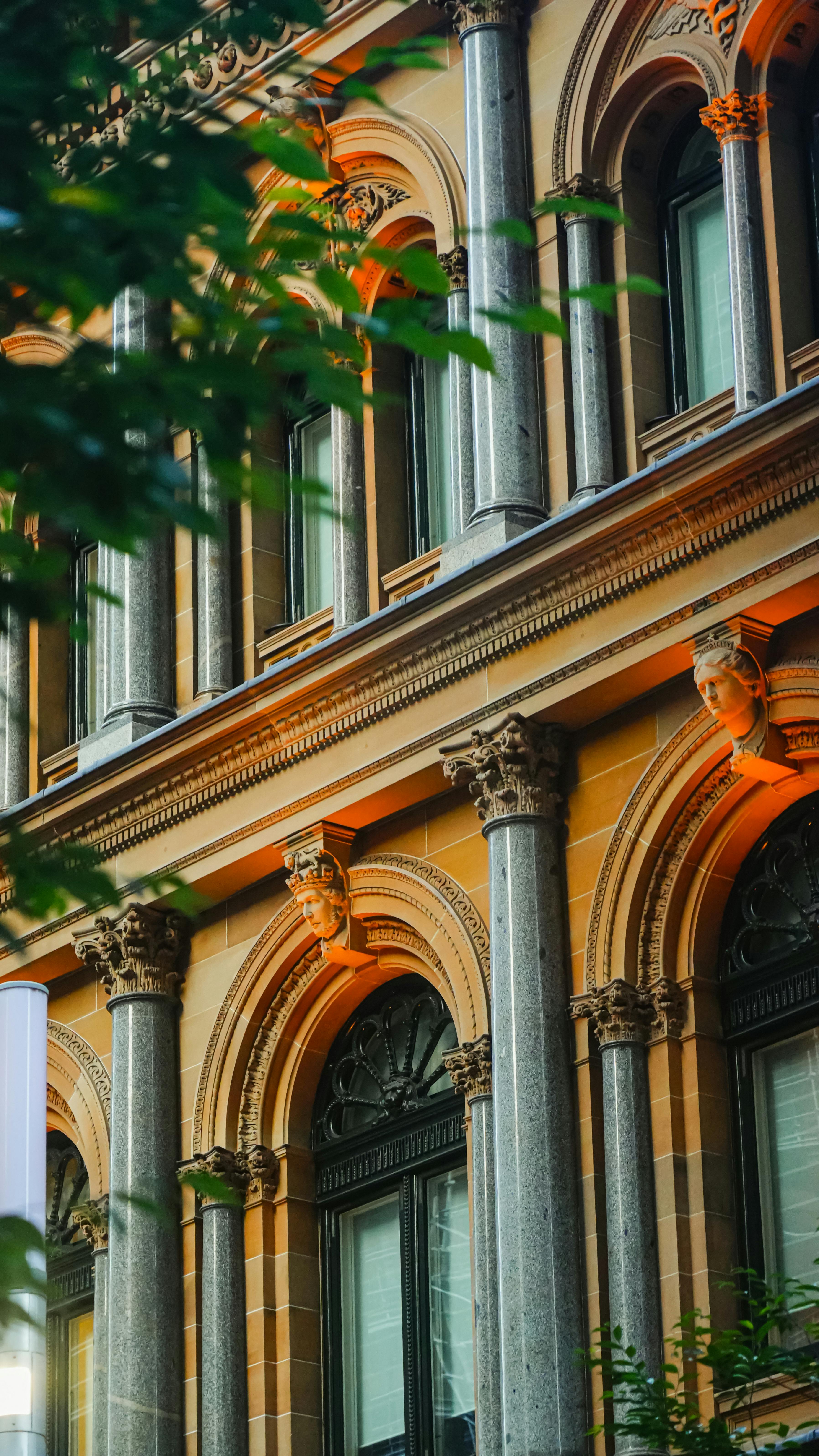
The cities that figured this out long before us didn't do it by accident. Walk through Barcelona, through Amsterdam, through Copenhagen, through the older neighbourhoods of Montreal and Quebec City. These are dense cities. They solved the housing problem generations ago. And they did it while producing streets that people travel across the world to experience. Not because they had unlimited budgets but because they had standards. Because someone in the room was allowed to ask — does this building deserve to exist here? Does it add something to the street, to the neighbourhood, to the city's sense of itself?
That question has been quietly removed from most North American planning conversations. And the results are visible everywhere you look.
Burlington has a real opportunity here because it's not too late. The downtown core still has human scale. The waterfront still has breathing room. The older neighbourhoods still have the kind of tree canopy and architectural variation that makes people feel, even unconsciously, that they're somewhere worth being. These are not accidents of history — they're assets that took decades to build and can be undermined in a single approval cycle.
What would it look like to get this right? It's not complicated in theory, even if it takes political will in practice.
Require materials that age well and have texture — brick, stone, wood, concrete with detail — instead of the glass and composite cladding that looks dated within a decade. Mandate ground-floor activation on any building touching a main street — retail, restaurants, studios, something that generates life at the sidewalk level. Plant trees. Serious ones, with enough soil volume to actually grow large. Vary the rooflines. Build courtyards. Create corners worth pausing at.
Insist that new development responds to its context — that a building on a heritage street looks like it belongs there, not like it landed from a different city entirely.
None of this is radical. Most of it was standard practice for most of human history. We stopped doing it somewhere in the mid-twentieth century when efficiency became the only value that mattered in construction, and we've been paying the price ever since in cities that are functional but joyless.
The housing crisis gives us a mandate to build at a scale we haven't seen in generations. That is genuinely exciting if we use it right. We have the chance to add to Burlington in a way that future residents will be grateful for — streets they'll want to walk down, buildings they'll be glad are there, neighbourhoods with the kind of character that compounds in value over time.
Or we can do what's fast and cheap and call it solving the problem.
The units will get built either way. The question is whether we're building a city or just filling space.
I know which one Burlington should be choosing.
Comment Section
Disclaimer
Please note that the information in this blog is for general guidance only and may not always be up to date or accurate. We recommend double-checking details directly with local cities, businesses, or official sources before making any plans or acting on the information. We are not a news outlet, and while we do our best to make sure information is accurate, sometimes we make mistakes. It is always best to verify with official sources. The inclusion of any business, individual, event, or service on the Burlington 365 platform does not constitute an endorsement, recommendation, or guarantee of its quality, performance, or reliability. Users are solely responsible for conducting their own research and due diligence before engaging with any third-party businesses or services listed on the platform.